Is Being Offline Really the New Luxury?

Thank you to Past Small Talk for sponsoring this post!
I've been creeped out by all the ways strangers can message me online. Private messaging features seem to have appeared out of nowhere on apps like Pinterest and Spotify, which are not really social media. It's insane that I had to spend time to figure out how to disable these default settings. Even event apps like Partiful, which are meant to help organize IRL gatherings, allow people who have never met to direct-message each other. The attention economy is so cutthroat now that every random app is trying to turn itself into its own little social network. I find it incredibly invasive. I suppose the reason always comes down to money; the longer we stay engaged and dependent on the app, the more money these companies make. But enough is enough.
This week, I sent an article to myself on WhatsApp so I could read it later, but I accidentally posted it as a Status update (basically stories that disappear after 24 hours). I only realized I did this the next day, so by the time I deleted the Status, a few people had already seen it. Luckily, it was a link to a pretty interesting BBC article on maladaptive daydreaming, but it's irksome how easy it was to accidentally make social media content. Then I had to spend more time trying to figure out how to opt out of posting Status updates on WhatsApp. (You can't really; you can only restrict who sees it.)
I don't want every app I use to be a space where I need to manage my online presence. Can I just listen to music, save an article, look up recipes, and RSVP for events without my activity being broadcast to everyone on the internet?
Privacy is definitely a luxury these days. Even so, traditional social media apps are working even harder to get users to stay on their apps. Unless someone really wants to give influencing a go or needs to promote their work, the average person is posting less publicly than they used to. I think we got so burnt out from constantly being online during Covid that we went the other way. Nobody even wants to post to their Stories anymore, so social media is putting out more features for private sharing, group chats, basically anything that keeps us interacting.
Even though social media has only existed for less than two decades, a lot of us are already over it. We've been guinea pigs all this time, being tested with endless scrolls, adaptive algorithms, comparison envy, and being bombarded with messages and notifications. What it's doing to our brains and mental health is still being studied, but I think it's safe to say it's not great.
Whenever I open one of these apps with the intention to find something specific, I end up getting distracted by short-form videos of strangers organizing their pantries or decorating cakes or something. Then twenty minutes pass, and I still haven't done the task I intended to do when I opened my phone.
When stuff like that happens, having a flip phone sounds appealing. I do know a couple of people who went that route. One is Gen Z and uses a flip phone, and the other is a millennial who uses an old iPhone that just has the bare essential apps, almost a dumb phone. I do see the challenges they run into, but the tradeoffs seem to be worth it for them.
If you’re ready to connect more intentionally offline, my friends and I have been using conversation card decks at picnics or beach days. A new one is Past Small Talk. Check them out for curated games to play for different social situations (date night, close friends, family dinners), available as card decks or free to play online.
Being offline is a trend now, even if people are still posting about their analogue lifestyles on social media. No-phone gatherings are becoming popular, and old tech is back. I recently dug up my old iPod and my sister's cute little pink iPod Nano. Realistically, I won't have a use for them because they don't have Bluetooth technology. I've become reliant on AirPods, which are handy for working out at the gym. I do see new gadgets being developed that allow access to the most useful apps without a phone, such as the Meadow device. However, it is expensive and requires a monthly subscription. It’s ridiculous that we have to go to such lengths just to be offline.
Though I hear about certain celebrities like Christopher Nolan and Ed Sheeran who use flip phones, even the average celebrity can struggle to go without social media since they risk being forgotten by a fickle public. It's a flex to be able to stay relevant while living offline. The wealthy and famous few who can do this have assistants or networks of people keeping them informed.
But even when someone does manage to live offline, FOMO is real, and they can still miss out on social events and community news. For most of us, the answer probably isn't to delete every single app. We have to self-regulate our own app use because tech companies are using their best tricks to keep us hooked. We need to learn how to use technology without letting it use us, and that looks different for everyone.
I haven't had the Instagram app on my phone for a few years now, and I log in on the desktop version to check my messages and see the odd post. Even if you see me post something, that means I have downloaded the app, posted, then deleted the app immediately after. Recently, I also had to delete the YouTube app from my phone because the Shorts algorithm finally got good enough to pull me in. I still have Pinterest and Substack, so as long as they keep video off their apps, I'm good with them on my phone for now. (Update: I also removed Substack from my phone.)
I'm not anti-tech at all. I just don't want social media to be the first thing I look at when I wake up, or when I'm bored. I want to reach for a book or to just stare into space and think. To do this, I have to really know myself and my habits so I can adapt when necessary. Everyone needs to find what works for them to prevent the apps from hijacking their brains. I see some people hide their apps in folders, while others have so many notifications that they rarely open anything, then get into trouble for not responding to texts.
I think I've hacked it for now. What I do appreciate about social media is that it's a great way to find out about local events. For example, my friend and I were trying to find places to learn and play mahjong, but nothing really came up when we searched for it on Google. Only when I started watching mahjong content on IG did the algorithm start delivering me posts on local events that I wouldn't have known about otherwise.
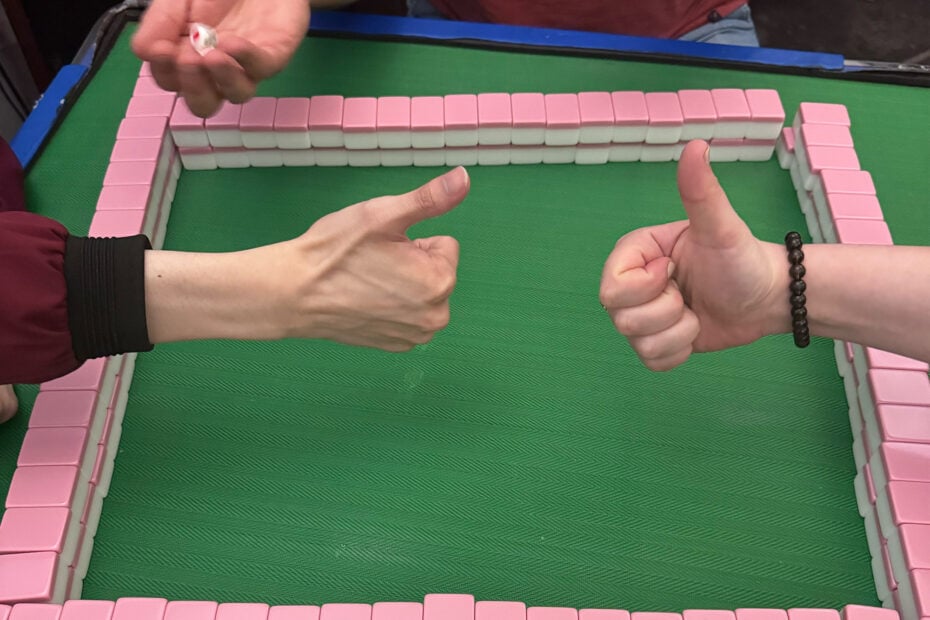
People are craving community more than ever. Chess, mahjong, run clubs, book clubs, trivia, craft nights, etc., have all become trendy. I've even seen bingo nights being catered to young people, so that's when you know we are desperate for any excuse to get together. A lot of traditional third spaces are not always built for connection, such as coffee shops and gyms, where people show up with headphones on to do their own thing, then leave. What people want now are recreational spaces where they can take a break from their phones, see the same familiar faces, and socialize. That sounds pretty basic, but since so much of our social lives have moved online, a lot of us are rusty on how to interact with each other. We can't rewind to 2003, but we can decide how we want to spend our time and energy.
I don't think it's feasible to reject technology. The internet has value. I don't want a flip phone. But I do want to be intentional about where my attention goes and who gets access to it.